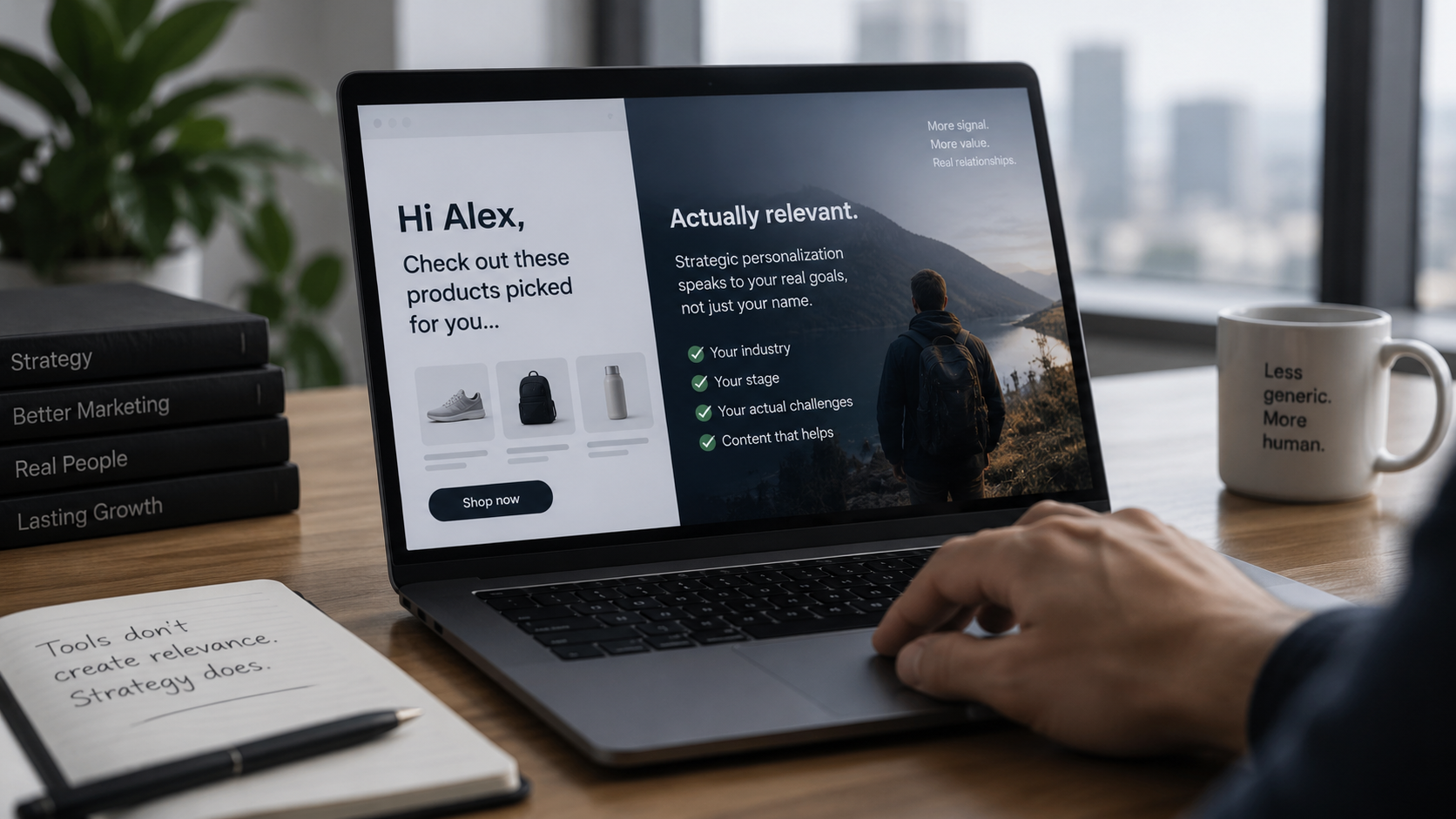



Most brands buying AI personalization tools end up with the same result: content that knows your name but doesn't know anything real about you. That's not personalization, it's automation wearing a personalization costume.
What "Personalized" Actually Means
Personalization isn't inserting a first name into a subject line or recommending a product because someone looked at a similar one once. Real personalization means the experience reflects something true and specific about that person's situation: their stage in the buying process, their actual problem, their context.
Most AI tools can do the first kind at scale. Almost none of them can do the second kind without a strategy behind them.
Why AI Makes This Worse Before It Makes It Better
Give an AI-personalization tool bad segmentation and thin customer data, and it won't fix the problem, it will scale it. You'll go from sending one generic email to everyone, to sending a hundred slightly-different generic emails to everyone, faster and with more confidence than before. The tool doesn't know the difference. It just executes.
This is why so much "personalized" marketing feels vaguely creepy rather than genuinely useful: it's technically tailored, but it isn't actually relevant.
What Real Personalization Requires First
- A specific understanding of who you're talking to, not a persona slide, but real segmentation based on behaviour and need.
- A clear point in the customer journey that the message is meant to move someone through, not just a channel to fill.
- Content built to be relevant, not just content built to be swapped in and out by a variable.
Get these right, and AI tools become genuinely useful: they can execute complexity at a scale no team could manage manually. Skip them, and the tools just make the underlying problem faster and more visible.
Where to Start
Before adding another personalization tool to your stack, audit what you're actually personalizing on. If the honest answer is "first name and browsing history," the fix isn't a better tool, it's better segmentation and a clearer view of what each group of customers actually needs to hear.
That's strategy work, not software work. It's also the part most agencies skip, because it's harder to sell than a new integration.
Want a second opinion on your personalization setup? Get in touch and we'll tell you honestly whether the problem is your tools or your strategy.