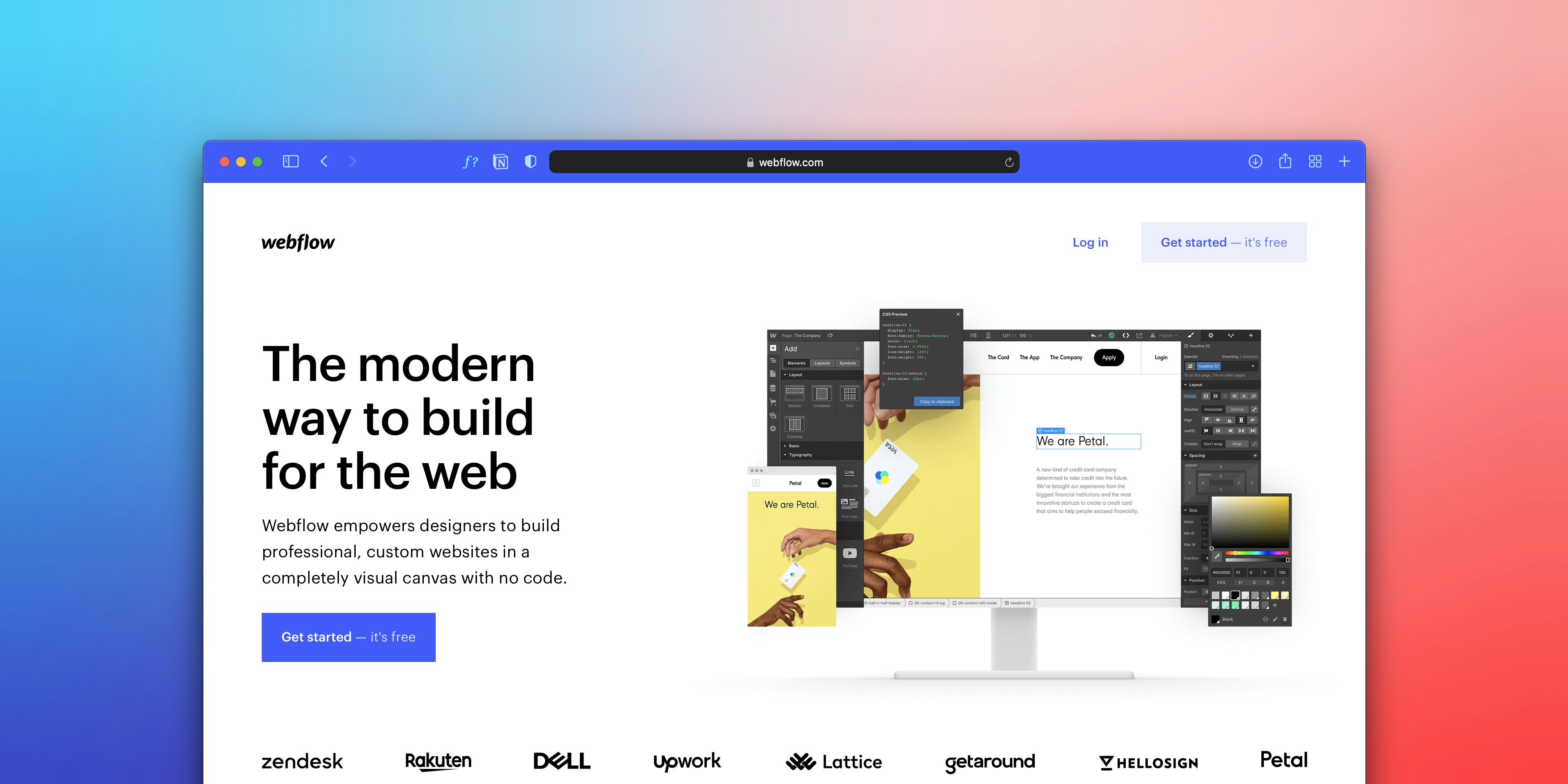



A potential client once walked away from us convinced that no-code platforms weren't "professional enough" for their business website. They wanted custom coding, believing it was the only way to get a serious result. We build 90% of our client projects on platforms like Webflow and Shopify, so we knew that belief was outdated, but we didn't push it. Six months and triple the budget later, they came back. We launched their site on Webflow in January.
WordPress: the platform that changed the assumption
Before modern builders, WordPress made the case that you could have a professional website without being a developer. Along with Drupal, it separated content from code and proved the demand for manageable, non-technical solutions was real. WordPress still powers over 43% of all websites.
Modern builders took that same promise and removed the remaining technical overhead: hosting, security, updates. What WordPress did semi-technically, platforms like Webflow now do automatically.
The current landscape
For most business sites:
- Webflow — custom design with real CMS capability. Our default choice for client work.
- Shopify — the standard for e-commerce, from small stores to enterprise.
- Wix — broad business tooling and a large app marketplace.
- Squarespace — strong for visual, brand-led businesses.
For simpler needs:
- Carrd — a one-page site, built in minutes.
- Notion — turns existing documents into a functioning site.
Not every business needs a complex website. Sometimes a well-built Carrd page does the job better than an over-engineered five-page site nobody updates.
Why platforms make business sense
Speed. Custom development typically takes months. A professional can launch a sophisticated site on a modern platform in weeks.
Built-in infrastructure. SEO tooling, analytics, responsive design, security updates, payment processing — all included, all things that would otherwise need custom development budget.
Cost. Custom-coded sites often start around $20,000 with ongoing development overhead. Platform-based builds deliver a comparable result at a fraction of that, freeing budget for the parts of the business that actually need it.
When custom code is still the right call
Platforms aren't universal. Custom development makes sense when you need functionality no existing platform supports, specialized data processing, complex proprietary integrations, or high-traffic performance tuning that off-the-shelf hosting can't handle.
The part that doesn't change
A platform gives you infrastructure, not strategy. The difference between a professional result and a mediocre one still comes from the same things it always did: user experience decisions, conversion-focused design, and a clear read on what the site actually needs to do. The tool doesn't replace that judgment, it just removes the busywork around it.
Want to dig into specific picks? Read our take on the top 3 no-code website builders.