
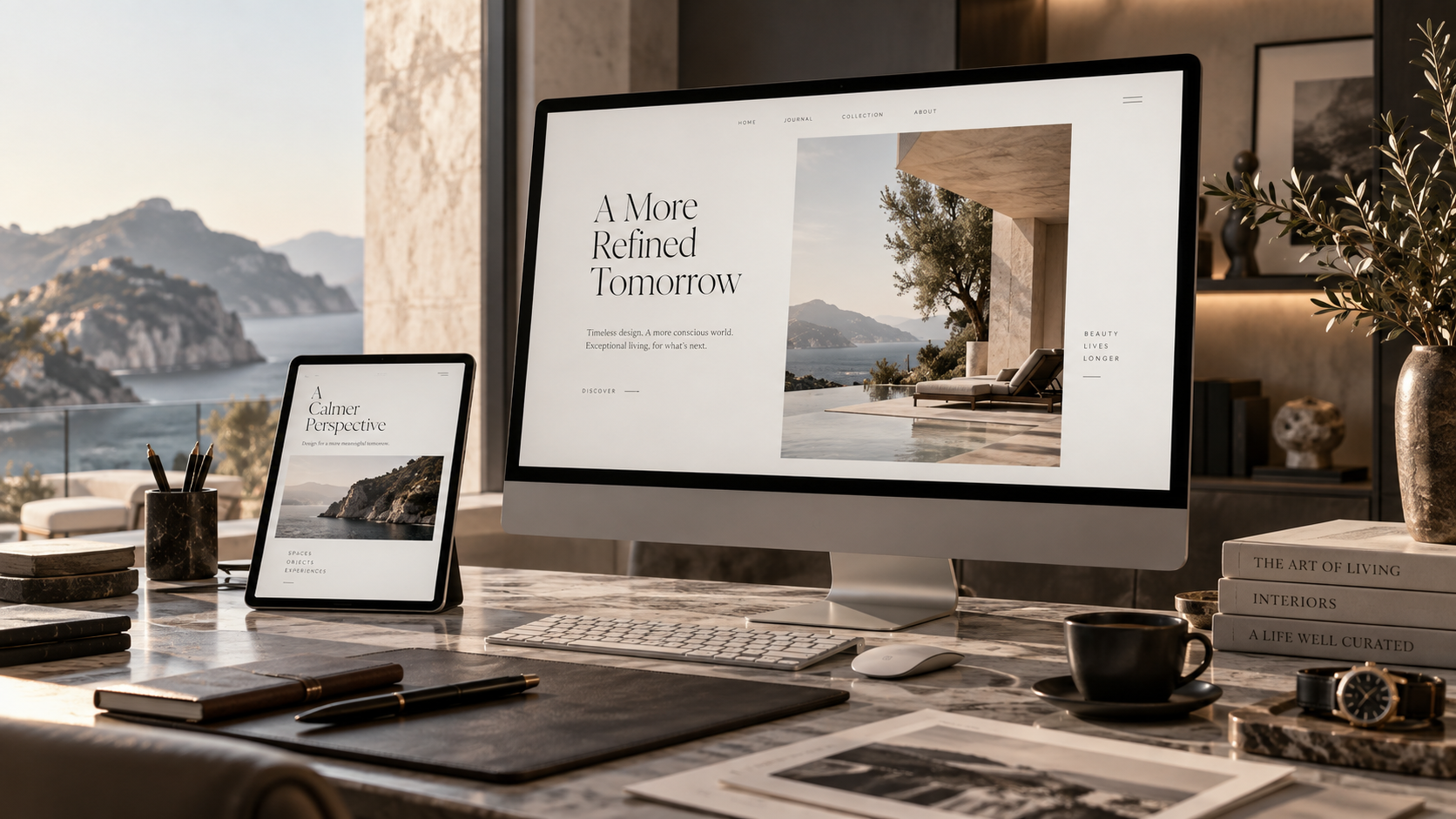



The digital universe is in a constant state of evolution, with new web design trends emerging every year. However, not every trend fits all brands, especially luxury ones. Luxury brands need to create a digital presence that transcends fleeting fads and encapsulates the timeless elegance that defines them. Their web design needs to underscore the premium quality of their products and services while balancing a sense of modernity and classical sophistication.
The Paradox of Luxury Web Design
The paradox of premium web design is to balance innovation with tradition. While it's crucial to keep up with technological advances to provide a seamless user experience, the design aesthetics should not bow to every short-lived trend. It needs to uphold the brand’s legacy, class, and the irreplaceable value proposition that luxury customers seek.
Classical Trends in Luxury Web Design
There are certain enduring trends that luxury brands can adopt to preserve their timelessness yet project a modern outlook.
- Minimalist Design: In a world where websites are inundated with an array of colors, animations, and elements, luxury brands stand out with a minimalist approach. The use of clean lines, ample white space, and a restrained color palette emphasizes the brand's sophistication.
- High-Quality Imagery: Luxury is about experiencing the exceptional, and visual appeal is pivotal in delivering this experience. Luxury brands should invest in high-quality, professional imagery that can convey their product’s exceptional quality or the exclusivity of their services.
- Typography: The right typography can greatly enhance the brand's elegance. Serif fonts, for instance, are traditionally associated with sophistication and prestige, making them a good choice for luxury brands.
- Interactive Elements: Interactive design elements, when used sparingly, can bring a modern edge to the brand. They help keep the user engaged without undermining the overall sophistication of the design.
- Storytelling: The essence of luxury brands is often rooted in their rich history. The website design should incorporate elements of storytelling, weaving the brand's heritage into the user experience.
Premium Products and Services
The above principles apply to both product and service industries within the luxury segment. The core is to emphasize the premium nature of the offering, whether it's a physical product like a high-end watch or a luxury service like a 5-star hotel.
Hotels, like the Four Seasons, apply these design principles to offer a virtual experience of their opulence. The website is minimalist and uses high-quality images to showcase their luxurious facilities. Stories about their services, location, and history are artfully woven into the user journey. Their use of an elegant typeface and interactive elements provide a user-friendly and visually appealing interface.
High-end car manufacturers like Rolls-Royce adopt a similar strategy. Their website design focuses on large, high-resolution images of their cars and includes interactive 3D models that customers can customize. The minimalist design, coupled with the brand’s rich history and choice of premium typography, encapsulates the brand's luxury status.
Key Takeaways
In conclusion, web design for prime and high-end brands revolves around crafting a digital experience that resonates with the exclusivity and exceptional quality they offer. By incorporating minimalist design, high-quality imagery, refined typography, interactive elements, and storytelling, these brands can achieve a timeless yet modern web presence. The blend of classical and innovative design elements ensures a lasting impression on customers seeking prime and high-end experiences.